Snacking Smarter: The Science of Staying Full and Energized Between Meals
Finding the right snack can make the hours between meals much easier. Healthy snacks that keep you full combine useful nutrients and fit your daily routine. They do not require strict dieting or constant calorie counting.
A satisfying snack usually contains protein, fiber, healthy fat, or a mix of all three. These nutrients slow digestion and help steady your energy. Smart portions also matter because even nutritious foods can add up quickly.
This guide explains why some snacks satisfy hunger better than others. It also offers practical ideas for work, home, travel, and busy days.
Key Takeaways
- Combine protein, fiber, and healthy fat for longer-lasting satisfaction.
- Choose portions that match your hunger and activity level.
- Compare protein, fiber, added sugar, sodium, and serving size on food labels.
- Keep simple snacks ready before hunger becomes intense.
- Treat snacks as part of your daily eating pattern, not as an afterthought.
Why Some Snacks Keep You Full Longer
Your body digests different foods at different speeds. Refined crackers, candy, and sugary drinks digest quickly. As a result, they may provide brief energy followed by renewed hunger.
Protein, fiber, and fat take longer to digest. They also influence the signals that tell your brain you have eaten enough. Together, they can make a snack feel more satisfying.
Food volume matters too. Fruits and vegetables contain water and fiber, so they fill more space in your stomach. A bowl of berries may feel more substantial than a small cookie.
How to Build Healthy Snacks That Keep You Full
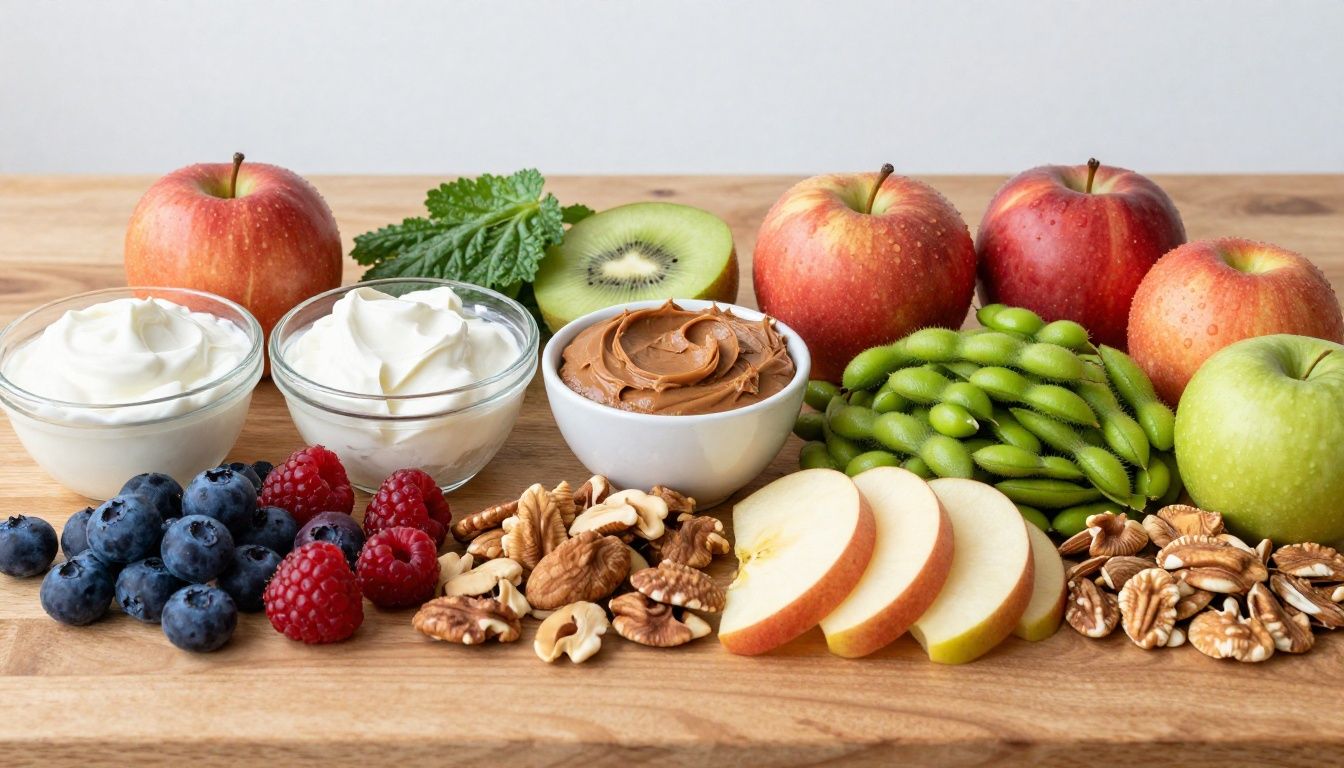
A filling snack does not need many ingredients. Start with one protein source and one fiber-rich food. Add a small amount of healthy fat when it fits.
Try these simple combinations:
- Fruit plus nut or seed butter
- Vegetables plus hummus
- Yogurt plus fruit and seeds
- Whole-grain crackers plus tuna or cheese
- Oatmeal plus nuts
- Eggs plus whole-grain toast
- Edamame plus fruit
- Cottage cheese plus berries
This approach gives the snack more balance. It can also help prevent the quick hunger that often follows a carbohydrate-only snack.
The Role of Protein
Protein often improves fullness because the body digests it slowly. It also supports muscles, tissues, and many normal body functions.
Useful snack proteins include eggs, Greek yogurt, cottage cheese, tuna, beans, hummus, edamame, nuts, seeds, and nut butter. Choose a source that suits your taste and dietary needs.
For a deeper explanation, read Protein: Why Your Body Needs It.
The Role of Fiber
Fiber adds bulk and can slow digestion. It also supports bowel regularity and digestive health.
Fruits, vegetables, oats, beans, chickpeas, whole grains, nuts, and seeds provide fiber. Increase fiber gradually if your current intake is low. A sudden increase may cause gas or bloating.
Learn more in The Benefits of Eating More Fiber.
The Role of Healthy Fats
Healthy fats can make a snack more satisfying. They also help the body absorb certain vitamins.
Nuts, seeds, avocado, olive oil, and nut butter provide useful fats. However, these foods contain a lot of energy in small portions. Measure a reasonable serving instead of eating directly from a large package.
Best Healthy Snacks That Keep You Full
The best snack depends on your schedule, hunger, and preferences. These ideas combine protein, fiber, or healthy fat.
1. Plain Greek Yogurt With Berries
Greek yogurt provides protein, while berries add fiber and natural sweetness. Choose plain yogurt when you want less added sugar.
2. Apple Slices With Peanut Butter
Apples provide water and fiber. Peanut butter adds protein and fat. A thin spread may be enough for a satisfying snack.
3. Cottage Cheese With Fruit
Cottage cheese supplies protein. Peaches, pineapple, berries, or melon add flavor and volume.
4. Hard-Boiled Eggs With Whole-Grain Crackers
Eggs offer protein and fat. Whole-grain crackers add carbohydrates and fiber. Check the serving size because cracker portions vary.
5. Hummus With Vegetables
Hummus contains chickpeas and tahini, which provide fiber, protein, and fat. Pair it with carrots, cucumber, bell peppers, or celery.
6. Oatmeal With Nuts or Seeds
Oats provide soluble fiber. Nuts or seeds add protein and healthy fat. Use cinnamon or fruit for extra flavor.
7. Chia Pudding
Chia seeds absorb liquid and form a thick texture. They provide fiber and healthy fat. Prepare a small batch ahead of time.
8. Roasted Chickpeas
Roasted chickpeas offer fiber and plant protein. Choose a lightly salted version, or season them at home.
9. Air-Popped Popcorn With Nuts
Popcorn provides whole-grain volume and fiber. A small serving of nuts adds protein and fat. Avoid coating the popcorn with large amounts of butter or sugar.
10. Avocado on Whole-Grain Toast
Avocado provides fiber and healthy fat. Whole-grain toast adds more fiber and carbohydrates. Add tomato or an egg for extra nutrition.
11. Tuna With Whole-Grain Crackers
Tuna supplies protein and requires little preparation. Pair it with whole-grain crackers and cucumber slices.
12. Cheese With Fruit
Cheese adds protein and fat. Apples, grapes, pears, or berries add fiber and sweetness. Keep the cheese portion moderate.
13. Edamame
Edamame provides plant protein and fiber. Buy it frozen, steam it, and season it lightly.
14. Trail Mix
A simple trail mix can combine nuts, seeds, and a small amount of dried fruit. Check the label for added sugar and oversized servings.
15. Banana With Almond or Peanut Butter
A banana provides carbohydrates and some fiber. Nut butter adds protein and fat. This option works well before or after activity.
Portable and No-Cook Snack Ideas
Busy days call for simple choices. Keep portable snacks in your bag, desk, or car when storage conditions allow.
Good options include:
- A piece of fruit and a small packet of nuts
- Whole-grain crackers and shelf-stable tuna
- Roasted chickpeas
- A lower-sugar protein bar
- Trail mix in a measured portion
- Nut butter packets with an apple
- Shelf-stable milk with whole-grain cereal
At home, no-cook snacks can be even simpler. Try yogurt with berries, cottage cheese with fruit, hummus with vegetables, or cheese with crackers.
Budget-Friendly Filling Snacks
Nutritious snacks do not need to cost a lot. Basic foods often provide the best value.
Try oatmeal, bananas, peanut butter, hard-boiled eggs, popcorn, canned tuna, carrots, and homemade roasted chickpeas. Store brands may cost less than heavily marketed snack products.
Buying larger containers can also reduce the cost per serving. Divide the food into smaller portions at home. This prevents a large package from encouraging mindless eating.
Plant-Based Snack Options
Plant-based snacks can provide protein, fiber, and healthy fat. Beans, lentils, soy foods, nuts, and seeds work especially well.
Try hummus with vegetables, edamame, roasted chickpeas, peanut butter with fruit, or chia pudding. Oatmeal with walnuts also makes a simple plant-based snack.
People who avoid animal foods should vary their protein sources. A varied diet makes it easier to meet nutrition needs.
Snacks That May Leave You Hungry Again
Some snacks provide energy but little staying power. Candy, cookies, pastries, chips, and sugary drinks often contain refined carbohydrates. They may also contain little protein or fiber.
Highly sweetened cereal bars can create the same problem. Their packages may look healthy, yet many contain large amounts of added sugar.
You do not need to ban these foods. Instead, enjoy them occasionally and pair them with something more filling. For example, eat a cookie with plain yogurt rather than eating several cookies alone.
How to Read Packaged-Snack Labels
The front of a package focuses on marketing. The Nutrition Facts label gives more useful information.
Check these items:
- Serving size
- Protein
- Fiber
- Added sugar
- Sodium
- Saturated fat
- Ingredient list
A product labeled “natural” may still contain a lot of sugar or sodium. Likewise, a “high-protein” snack may offer only a small amount of protein.
Compare similar products when possible. Choose the option that best supports your needs rather than chasing a perfect label.
MedlinePlus also recommends balanced snacks and reasonable portions in its guide to snacks for adults.
Portion Size and Mindful Snacking
Hunger should guide snack size. A small snack may work when dinner is one hour away. A larger mini-meal may fit better after exercise or before a late dinner.
Eat from a bowl or plate instead of a large package. This simple step makes the portion easier to see.
Also, slow down while you eat. Put away your phone or computer when possible. Paying attention can help you notice when hunger begins to fade.
Snacking and Weight Management
Snacking does not automatically cause weight gain. Total food intake, portions, activity, and food choices all matter.
A planned snack may prevent extreme hunger before the next meal. However, frequent eating without hunger can add more energy than your body needs.
Avoid strict rules that ignore your own signals. Some people feel best with three meals and two snacks. Others prefer fewer eating times.
A balanced meal pattern can reduce the need for constant snacking. Building a Healthy Plate at Every Meal offers a useful framework.
When to Speak With a Healthcare Professional
Constant hunger can sometimes signal a medical or nutrition problem. Speak with a healthcare professional if hunger remains intense despite balanced meals.
Also seek advice for unexplained weight changes, dizziness, persistent fatigue, or major appetite changes. A doctor can check for underlying causes.
People with diabetes, food allergies, digestive disorders, or other conditions may need personalized guidance. A registered dietitian can help create a safe plan.
Frequently Asked Questions
How Many Snacks Should I Eat Each Day?
There is no required number. Your meal schedule, activity level, and hunger should guide you. Some people need no snacks, while others benefit from one or two.
Can Snacking Cause Weight Gain?
Snacking can contribute to weight gain when it regularly adds more energy than your body uses. However, balanced portions can fit into a healthy eating pattern.
Why Do Some Snacks Make Me Hungrier?
Snacks high in sugar and refined carbohydrates digest quickly. They may lack enough protein, fiber, or fat to support lasting fullness.
Are Protein Bars Good Snacks?
Some protein bars offer convenience and useful nutrition. Others contain lots of added sugar and little fiber. Read the label and compare options.
Is Eating After Dinner Unhealthy?
Eating after dinner is not automatically unhealthy. Consider whether you feel true hunger and whether the snack fits your overall eating pattern.
Final Thoughts
Choosing healthy snacks that keep you full becomes easier when you use a simple formula. Pair protein with fiber, then add healthy fat when needed.
Plan a few options that suit your schedule and budget. Keep portions reasonable, read labels, and notice how different snacks affect your hunger.
Most importantly, choose foods you enjoy. Consistent, practical habits work better than strict rules or perfect eating.