
What To Eat If You Have IBS
Navigating digestive health can feel confusing, especially when deciding what to eat if you have IBS. Irritable bowel syndrome, or IBS, is a long-term digestive condition. It can cause bloating, gas, abdominal pain, diarrhea, constipation, or changing bowel habits.
Food choices often affect symptoms. However, no single diet works for everyone with IBS. Finding the right approach takes patience, careful testing, and attention to your body’s response.
This guide explains foods that many people tolerate well. It also covers fiber, portion sizes, meal timing, food journaling, and common dietary mistakes. The goal is not a perfect diet. Instead, aim for a balanced eating pattern that reduces symptoms and supports good nutrition.
Key Takeaways
IBS triggers vary from person to person. A detailed food journal can help reveal your patterns.
Lean proteins and moderate portions of low-FODMAP foods are often easier to tolerate.
Meal size and timing can matter as much as the foods you choose.
Soluble fiber may be gentler than insoluble fiber, especially during diarrhea.
Add fiber slowly and drink enough water.
Elimination diets should be temporary and guided by a qualified healthcare professional.
Understanding What to Eat If You Have IBS
IBS is known as a disorder of gut-brain interaction. The digestive tract may look normal during testing, yet it does not always function normally. The gut can also become more sensitive to food, stress, hormones, and changes in routine.
When choosing what to eat if you have IBS, focus on patterns rather than perfection. One meal rarely tells the full story. A food may cause symptoms one day but feel fine another day. Portion size, sleep, stress, and other foods can change your response.
Start with simple meals made from familiar ingredients. Then test one change at a time. This method makes it easier to identify helpful foods and personal triggers.
The Role of FODMAPs
FODMAPs are short-chain carbohydrates that some people absorb poorly. The term stands for fermentable oligosaccharides, disaccharides, monosaccharides, and polyols.
These carbohydrates can draw water into the bowel. Gut bacteria may also ferment them and produce gas. For sensitive people, that process can cause pain, bloating, diarrhea, or constipation.
Not everyone with IBS reacts to every FODMAP. In fact, many people tolerate some high-FODMAP foods in small amounts. The goal is to identify your specific triggers without removing more foods than necessary.
A low-FODMAP diet usually has three stages. First comes a short elimination period. Next, foods are tested in a structured reintroduction phase. Finally, tolerated foods return to the regular diet.
Our Low FODMAP Diet for IBS: A Beginner’s Guide explains this process in more detail. Monash University also provides reliable information about FODMAPs and irritable bowel syndrome.
Foods Many People With IBS Tolerate Well
Tolerance varies, but some foods are often easier to digest. Begin with small portions and observe your response.
Lean Proteins
Plain chicken, turkey, fish, eggs, and firm tofu are common choices. Protein does not contain FODMAP carbohydrates. Therefore, plain protein foods do not usually ferment in the colon.
Preparation still matters. Fried foods and heavy sauces may trigger symptoms because they contain excess fat or hidden ingredients. Choose grilled, baked, steamed, or roasted options when possible.
Lower-FODMAP Grains and Starches
Rice, oats, quinoa, potatoes, and sourdough spelt bread may work well for some people. Portion size remains important. Large servings can still overload a sensitive digestive system.
Oats are especially useful because they contain soluble fiber. This fiber absorbs water and may help regulate stool consistency.
Fruits in Moderate Portions
Some lower-FODMAP fruits include strawberries, blueberries, kiwi, grapes, oranges, and cantaloupe. Fruit portions should stay moderate because FODMAP content can rise with serving size.
Try one fruit at a time. Avoid combining several types in one large smoothie during the testing phase.
Vegetables That May Be Gentler
Carrots, spinach, zucchini, cucumbers, bell peppers, green beans, and eggplant are often well tolerated. Cooking vegetables may make them easier to digest than eating them raw.
Start with a small serving. Then increase the amount slowly if symptoms remain controlled.
Lactose-Free Alternatives
Lactose can cause symptoms in people who do not digest it well. Lactose-free milk, hard cheeses, and some plant-based milks may be easier choices.
Check plant-based products for added inulin, chicory root, or high-FODMAP sweeteners. These ingredients can trigger symptoms in some people.
Choose the Right Type of Fiber
Fiber supports bowel health, but different types act differently in the gut.
Soluble fiber absorbs water and forms a gel-like texture. It can help soften hard stool and add structure to loose stool. Oats, psyllium, peeled fruit, and carrots contain soluble fiber.
Insoluble fiber adds bulk and can speed movement through the bowel. It appears in wheat bran, many whole grains, seeds, and vegetable skins. Some people tolerate it well. Others notice more urgency, gas, or discomfort.
Increase fiber slowly. A sudden jump can cause bloating even when the fiber is helpful. Also, drink enough water so the fiber can work properly.
Build Balanced, IBS-Friendly Meals
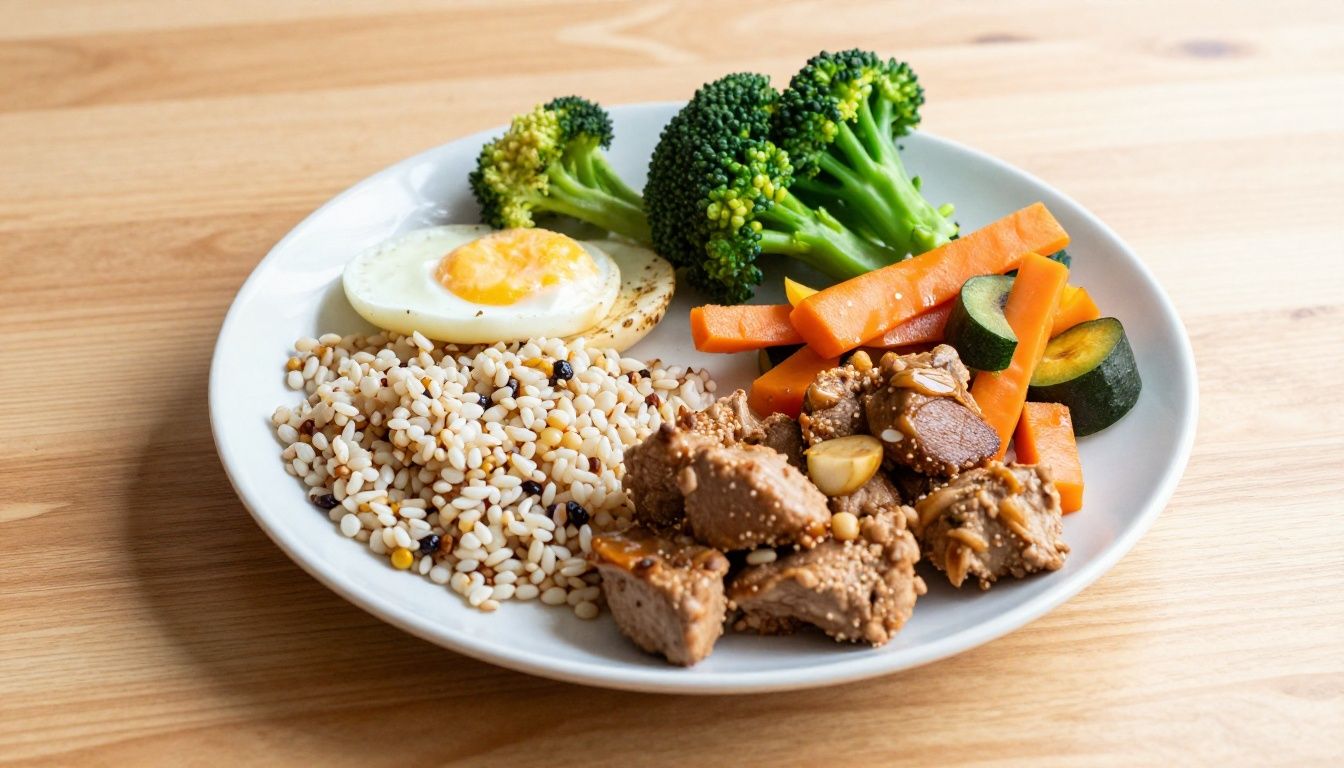
A balanced plate can include protein, a tolerated starch, cooked vegetables, and a small amount of healthy fat. This combination provides energy without creating an oversized meal.
For breakfast, try oatmeal with blueberries and a small serving of walnuts. Another option is scrambled eggs with sourdough toast.
Lunch could include grilled chicken, spinach, cucumber, rice, and olive oil dressing. Dinner might feature baked fish, quinoa, and steamed carrots.
Simple meals make it easier to track symptoms. They also reduce the chance of hidden onions, garlic, sweeteners, or additives.
Pay Attention to Portion Size
A food may be well tolerated in a small amount but troublesome in a large serving. This effect is sometimes called FODMAP stacking. Several moderate-FODMAP foods can add up during one meal.
Eat slowly and stop before feeling overly full. Large meals can stretch the stomach and stimulate bowel activity. For some people, this causes cramping or urgent bowel movements.
Smaller meals may feel more comfortable. However, frequent grazing can also create problems for certain people. Test a regular eating schedule and record the results.
Use Meal Timing to Support Digestion
Consistent meal timing can help the digestive system develop a predictable rhythm. Try to avoid skipping meals and then eating a very large dinner.
Leave enough time to eat without rushing. Chew each bite well and pause between bites. These habits may reduce swallowed air and help you notice fullness sooner.
Late-night meals can worsen discomfort for some people. Consider finishing dinner several hours before bed when possible.
Keep a Food and Symptom Journal
A journal can show patterns that memory often misses. Record the food, portion size, meal time, and preparation method. Also note symptoms, stress, sleep, medication changes, and bowel habits.
Do not judge a food after one reaction. Instead, look for repeated patterns over several days. Testing one new food at a time gives clearer results.
IBS symptoms can overlap with other digestive problems. Read IBS Symptoms Explained: Causes, Signs & Treatment Options for a clearer picture of common signs.
Know the Difference Between IBS and Food Intolerance
IBS and food intolerance can cause similar symptoms. Both may lead to gas, bloating, pain, or diarrhea. However, they are not the same condition.
A food intolerance usually involves difficulty digesting a specific substance, such as lactose. IBS involves a broader pattern of digestive sensitivity and altered bowel habits.
Some people have both IBS and a food intolerance. Proper evaluation can help prevent unnecessary food restrictions. Our guide to IBS vs Food Intolerance: What’s the Difference? explains the distinction.
Common Mistakes to Avoid
One common mistake is removing too many foods at once. This makes it hard to identify the true trigger. It may also reduce fiber, vitamins, minerals, and food variety.
Another mistake is following a strict low-FODMAP diet for too long. The elimination stage is temporary. Reintroduction helps expand the diet and protect nutritional balance.
People may also focus only on food. Stress, poor sleep, dehydration, medications, and hormonal changes can affect symptoms. A complete journal helps capture these factors.
Finally, avoid treating every symptom as proof that a food is permanently unsafe. Symptoms naturally fluctuate. Use repeated testing and professional guidance before making long-term restrictions.
Practical Steps for Beginners
Begin with meals you already know and tolerate. Make one small change, then observe your symptoms for several days.
Use these steps:
Keep meals simple and portions moderate.
Test only one new food at a time.
Record symptoms and bowel changes.
Add fiber gradually.
Drink water throughout the day.
Limit heavy, greasy, or highly processed meals.
Review your journal each week for repeated patterns.
A registered dietitian can help organize this process. Look for someone with experience in IBS or the low-FODMAP diet.
When to Speak With a Healthcare Professional
Dietary changes can help many people, but they cannot replace medical evaluation. Speak with a healthcare professional before making major restrictions.
Seek prompt medical advice for blood in the stool, unexplained weight loss, anemia, fever, or nighttime diarrhea. New digestive symptoms later in life also deserve medical attention. A family history of bowel cancer, inflammatory bowel disease, or celiac disease may require further testing.
Before removing gluten, ask about celiac disease testing. Testing can become less accurate after gluten has already left the diet.
Frequently Asked Questions
Is Gluten Bad for Everyone With IBS?
No. Some people report fewer symptoms without gluten, while others notice no difference. Wheat also contains fructans, which are FODMAPs. Therefore, symptoms blamed on gluten may sometimes come from fructans instead.
Can I Still Eat Fruit If I Have IBS?
Yes. Choose moderate portions and test one fruit at a time. Strawberries, blueberries, kiwi, grapes, oranges, and cantaloupe may be easier for many people.
Should I Avoid All Dairy Products?
Not necessarily. Lactose-free milk and hard cheeses contain little or no lactose. Some people can also tolerate small portions of yogurt. Your individual response should guide your choices.
Can the Same Food Affect Me Differently on Different Days?
Yes. Stress, sleep, hydration, exercise, hormones, portion size, and other foods can change your response. A food journal can help reveal these combinations.
How Long Does It Take to Notice Improvement?
Some people notice changes within a few days. Others need several weeks of consistent habits. Avoid changing several things at once because that makes results difficult to interpret.
Final Thoughts
Learning what to eat if you have IBS is a personal process. Begin with simple, balanced meals and moderate portions. Then use a journal to identify patterns.
Choose curiosity over fear. A varied diet is usually better than a permanently restrictive one. Small, sustainable changes can support comfort, nutrition, and long-term digestive health.
Professional guidance is valuable when symptoms remain severe or confusing. A doctor can rule out other conditions. A registered dietitian can help you test foods safely and rebuild variety.
Related Articles
Lorem ipsum dolor sit amet, consectetur adipiscing elit. Ut elit tellus, luctus nec ullamcorper mattis, pulvinar dapibus leo.